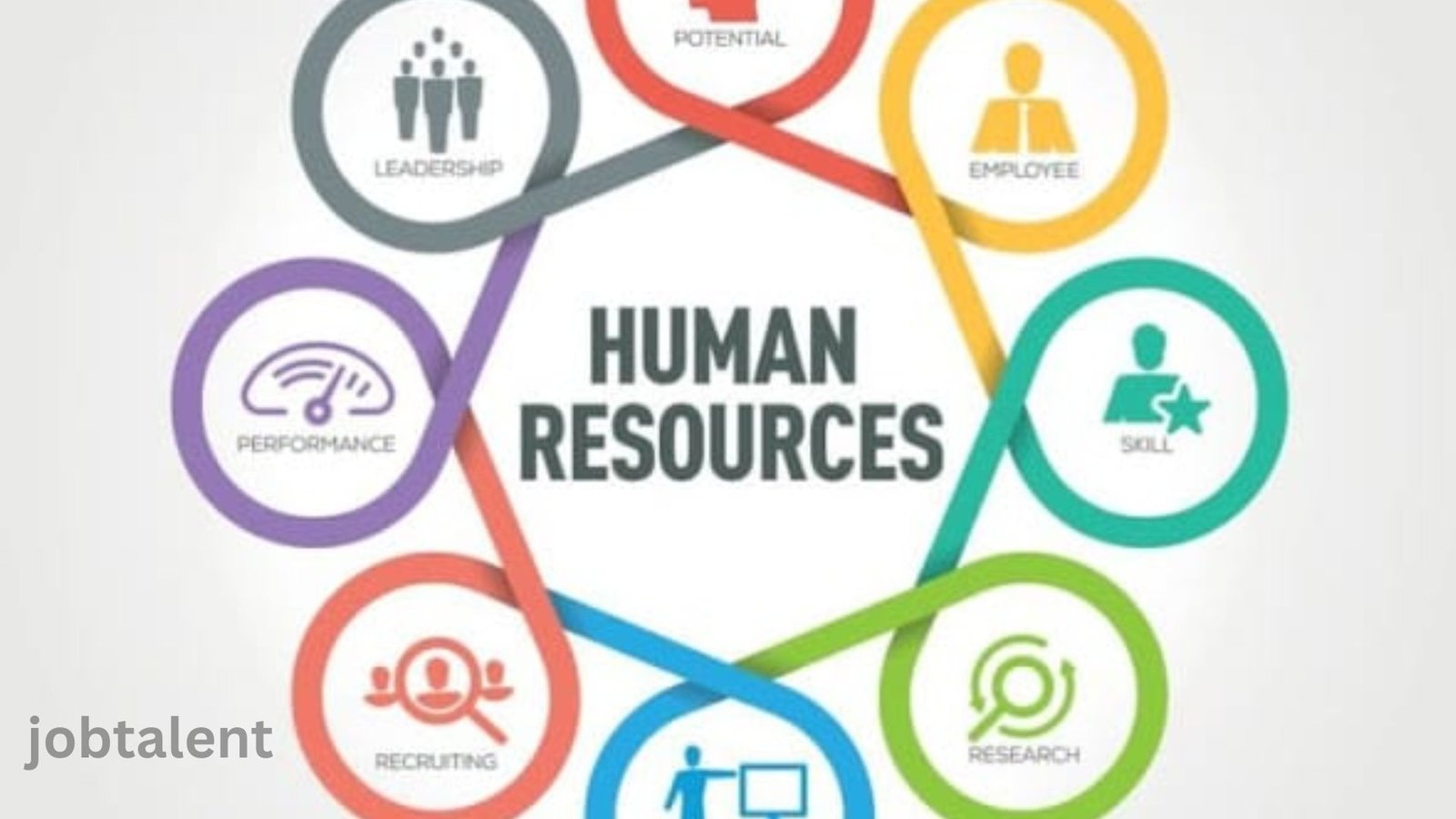
Every company, no matter how small or large, needs one critical function to survive: Human Resources. Without HR, there is no recruitment, no payroll, no employee policies, and no conflict resolution. HR Jobs are the backbone of organizational health. If you enjoy working with people, solving problems, and creating positive workplace cultures, a career in Human Resources could be your perfect fit.
This comprehensive 3000+ word guide covers everything you need to know about Human Resources Jobs—from entry-level assistant roles to senior HR Director positions. You will learn about daily responsibilities, required skills, certifications, salary expectations in Pakistan and worldwide, interview questions, and where to find legitimate HR Careers. Whether you are a fresh graduate or an experienced professional looking to switch into HR, this guide is for you.
What Are HR Jobs?
HR Jobs (Human Resources Jobs) encompass all roles responsible for managing an organization’s employee lifecycle. HR professionals handle everything from hiring new staff to firing underperformers, from designing training programs to ensuring legal compliance.
Core Purpose of HR:
- Align employee goals with company strategy.
- Maximize employee productivity and satisfaction.
- Protect the organization from legal risks (discrimination, harassment, safety).
- Build and maintain workplace culture.
Why HR Professionals Are Important:
| Business Need | How HR Helps |
|---|---|
| Finding talent | Recruits, screens, and hires qualified candidates |
| Retaining employees | Designs engagement programs and career paths |
| Legal compliance | Ensures labor laws are followed (leaves, wages, safety) |
| Conflict management | Mediates disputes between employees or managers |
| Performance improvement | Manages appraisals, feedback, and training |
Without HR, organizations would face chaos: unfilled positions, illegal hiring practices, unmotivated staff, and constant lawsuits.
What Does an HR Professional Do?
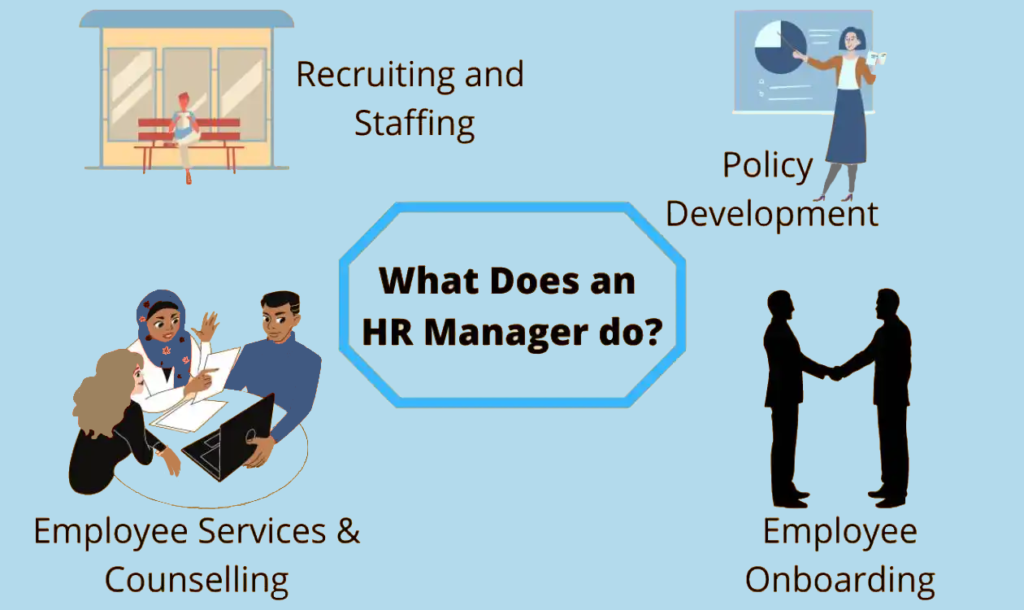
A typical HR professional wears many hats. Depending on their specialization, daily tasks include:
1. Recruitment and Hiring
- Writing job descriptions.
- Posting openings on job boards.
- Screening resumes and conducting initial interviews.
- Coordinating interviews with department heads.
- Extending job offers and negotiating salaries.
2. Employee Relations
- Addressing employee grievances and complaints.
- Investigating harassment or discrimination claims.
- Mediating conflicts between coworkers or managers.
- Conducting exit interviews for departing employees.
3. Performance Management
- Managing annual or quarterly performance reviews.
- Setting key performance indicators (KPIs) with managers.
- Creating performance improvement plans (PIPs) for struggling employees.
- Recommending promotions or terminations.
4. Training and Development
- Identifying skill gaps within the organization.
- Organizing workshops, seminars, or online courses.
- Tracking employee certifications and progress.
- Developing leadership programs for high-potential staff.
5. Payroll Coordination
- Collecting timesheets and attendance data.
- Coordinating with finance to process monthly salaries.
- Calculating overtime, bonuses, and deductions.
- Issuing pay slips and tax documents.
6. Benefits Administration
- Managing health insurance enrollment.
- Administering retirement plans (provident fund, pension).
- Tracking vacation days, sick leave, and parental leave.
- Ensuring compliance with labor law benefits.
7. Workplace Policies
- Drafting employee handbooks.
- Updating policies for remote work, dress code, or discipline.
- Communicating policy changes to all staff.
- Ensuring workplace safety and health regulations.
Types of HR Jobs
Human Resources Careers range from entry-level administrative roles to strategic executive positions. Here is a detailed breakdown:
| Job Title | Experience Level | Primary Focus | Typical Salary Range (PKR/month) |
|---|---|---|---|
| HR Assistant | 0–1 year | Administrative support (filing, scheduling interviews) | 35k – 55k |
| HR Coordinator | 1–2 years | Coordinating recruitment, onboarding, and events | 50k – 80k |
| HR Executive | 2–4 years | Handling recruitment, employee relations, and payroll support | 60k – 100k |
| HR Generalist | 3–5 years | All-round HR (recruitment, relations, compliance, training) | 80k – 150k |
| HR Specialist | 3–6 years | Deep expertise in one area (compensation, training, or recruitment) | 90k – 180k |
| Talent Acquisition Specialist | 2–5 years | End-to-end recruitment, sourcing, employer branding | 80k – 160k |
| Recruitment Officer | 1–3 years | Focused only on hiring (screening, interviewing, offers) | 60k – 100k |
| HR Manager | 5–8 years | Leading an HR team, strategy, budgeting | 150k – 300k |
| Learning & Development Manager | 5–8 years | Designing training programs, leadership development | 150k – 280k |
| Compensation & Benefits Specialist | 4–7 years | Pay structures, bonuses, insurance, retirement plans | 120k – 250k |
| HR Business Partner (HRBP) | 6–10 years | Strategic advisor to department heads, aligning HR with business goals | 200k – 400k |
| Director of Human Resources | 10+ years | Overall HR strategy, C-suite advisory, major policy decisions | 350k – 700k+ |
Detailed Descriptions:
HR Assistant
Entry-level role. You will maintain employee files, schedule interviews, post job ads, and answer basic employee queries. Excellent for Entry-Level HR Jobs.
HR Generalist
A “jack of all trades.” You handle recruitment, employee relations, compliance, and sometimes payroll. This role is common in mid-sized companies.
Talent Acquisition Specialist
Focused entirely on hiring. You source candidates (LinkedIn, job boards), conduct screenings, manage applicant tracking systems (ATS), and negotiate offers.
HR Business Partner (HRBP)
A senior role where you work directly with department heads (e.g., Sales Director, IT Director) to align HR strategy with business goals. You advise on workforce planning, succession planning, and organizational design.
Skills Required for HR Jobs
To succeed in HR Opportunities, you need a blend of soft skills (people skills) and hard skills (technical knowledge).
Soft Skills (Essential):
| Skill | Why It Matters |
|---|---|
| Communication | You write emails, conduct interviews, and present policies. |
| Interpersonal Skills | Building trust with employees at all levels. |
| Leadership | Influencing managers and guiding employees. |
| Conflict Resolution | Mediating disputes without taking sides. |
| Time Management | Managing recruitment deadlines, payroll cycles, and multiple priorities. |
| Organizational Skills | Keeping employee records, compliance documents, and interview schedules in order. |
| Problem Solving | Finding creative solutions to retention or morale issues. |
| Emotional Intelligence | Reading people’s emotions and responding appropriately. |
Hard Skills (Technical):
- HR Software: Familiarity with Applicant Tracking Systems (ATS) like Workday, BambooHR, or JazzHR.
- Payroll Systems: Basic knowledge of payroll software (QuickBooks, ADP).
- Labor Laws: Understanding of local employment laws (leave entitlements, termination procedures, anti-discrimination).
- Data Analysis: Using Excel or HR analytics tools to track turnover rates, time-to-hire, and other metrics.
- Performance Management Systems: Experience with OKRs, KPIs, or 360-degree feedback tools.
Educational Requirements for HR Careers
| Path | Duration | Best For | Pros | Cons |
|---|---|---|---|---|
| Bachelor’s in HR / Business Admin | 4 years | Traditional corporate HR roles | Strong foundation, widely recognized | Time-consuming, theory-heavy |
| Bachelor’s in Psychology / Sociology | 4 years | Employee relations, organizational behavior | Understanding human behavior | Lacks business/HR specific training |
| Diploma in HR Management | 6–12 months | Career switchers, working professionals | Faster, practical | Less recognized by large MNCs |
| MBA in Human Resources | 1–2 years (post-graduation) | Senior HR roles, HRBP, Director | High salary potential, strategic focus | Expensive |
| Self-Learning + Certification | 3–6 months | Entrepreneurs, startups, remote HR | Flexible, low cost | Requires networking to find jobs |
Most Common Degree: Bachelor of Business Administration (BBA) in Human Resources or Bachelor of Commerce (BCom) with HR electives.
HR Certifications That Can Boost Your Career
Certifications validate your knowledge to employers. Here are the most respected global certifications:
| Certification | Issuing Body | Global Recognition | Cost (USD) | Experience Required |
|---|---|---|---|---|
| SHRM-CP | Society for Human Resource Management | Very high (USA, global) | $300–$400 | 0–1 year |
| SHRM-SCP | SHRM | Very high (senior level) | $400–$500 | 3+ years |
| aPHR (Associate Professional in HR) | HRCI | High (entry-level) | $300 | 0 experience |
| PHR (Professional in HR) | HRCI | High | $400 | 1–2 years |
| SPHR (Senior Professional) | HRCI | High | $500 | 4+ years |
| CIPD Level 3/5/7 | Chartered Institute of Personnel Development | Very high (UK, Europe, Australia) | £500–£2,000 | Varies |
| Talent Management Certification | AIHR (Academy to Innovate HR) | Medium | $500–$1,000 | 0–2 years |
Recommendation for beginners: Start with SHRM-CP or aPHR. These are recognized globally and do not require years of experience.
HR Jobs for Fresh Graduates
If you just graduated, you can still find Entry-Level HR Jobs. Here are the best roles:
Top Entry-Level HR Positions:
- HR Assistant – Administrative support.
- Recruitment Coordinator – Scheduling interviews, posting jobs.
- HR Intern – 3–6 month learning role (often converts to permanent).
- Onboarding Specialist – Helping new hires complete paperwork.
- HR Data Entry Clerk – Maintaining employee databases.
Where Fresh Graduates Get Hired:
- Call centers / BPOs (high turnover = constant hiring).
- Retail chains (many stores, many employees).
- Small to medium businesses (need generalist HR support).
- Recruitment agencies (learn how to hire for other companies).
Salary for Fresh Graduates in HR:
- Pakistan: PKR 35k – 60k/month.
- UAE: AED 5k – 8k/month.
- Canada: CAD 40k – 50k/year.
Tip: An internship during your final year of university dramatically improves your chances.
Remote HR Jobs
The pandemic permanently shifted many HR Jobs to remote or hybrid models.
Types of Remote HR Roles:
- Remote Recruiter / Talent Acquisition Specialist – Sourcing candidates globally.
- Remote HR Coordinator – Managing onboarding, documentation, and employee queries via Slack/email.
- Remote HR Generalist – For fully distributed companies (e.g., tech startups).
- Freelance HR Consultant – Advising small businesses on policies and compliance.
Best Platforms for Remote HR Jobs:
- LinkedIn (filter by “Remote”).
- Remote OK (search “HR” or “People Operations”).
- We Work Remotely (HR category).
- Upwork (freelance HR projects).
Challenges of Remote HR:
- Building trust without face-to-face interaction.
- Conducting virtual investigations (harder to read body language).
- Managing time zones if employees are global.
HR Jobs in Pakistan
Pakistan’s HR job market is growing as companies professionalize.
Top Cities for HR Jobs in Pakistan:
| City | Key Industries | Average HR Salary (Mid-Level) |
|---|---|---|
| Karachi | Banking, textiles, FMCG, IT | PKR 80k – 150k |
| Lahore | IT startups, retail, manufacturing | PKR 70k – 130k |
| Islamabad/Rawalpindi | NGOs, diplomatic missions, tech | PKR 80k – 160k |
| Faisalabad | Textile manufacturing | PKR 60k – 100k |
Companies Frequently Hiring HR Professionals in Pakistan:
- Banking: HBL, UBL, MCB, Standard Chartered.
- Telecom: Jazz, Telenor, Zong.
- IT: Systems Limited, Netsol, Devsinc.
- FMCG: Unilever, Nestlé, Engro.
- Retail: Khaadi, Sapphire, Outfitters.
Average HR Salaries in Pakistan (Monthly):
| Position | Entry | Mid-Level (3–5 yrs) | Senior (8+ yrs) |
|---|---|---|---|
| HR Assistant | 35k – 55k | N/A | N/A |
| HR Coordinator | 50k – 70k | 70k – 90k | N/A |
| HR Generalist | 60k – 80k | 90k – 140k | 160k – 220k |
| HR Manager | N/A | 150k – 220k | 250k – 400k |
| HR Business Partner | N/A | 180k – 280k | 300k – 500k |
HR Jobs in the UAE
The UAE (Dubai, Abu Dhabi) offers tax-free Human Resources Jobs with excellent expat packages.
In-Demand HR Roles in UAE:
- Talent Acquisition Specialist (many multinational headquarters).
- HR Manager (hotels, real estate, banks).
- Compensation & Benefits Specialist (oil & gas, consulting).
- HR Business Partner (retail, logistics).
Average Monthly Salaries (AED, tax-free):
| Role | Entry | Mid-Level | Senior |
|---|---|---|---|
| HR Assistant | 4k – 6k | N/A | N/A |
| HR Coordinator | 6k – 10k | 10k – 14k | N/A |
| HR Generalist | 8k – 12k | 14k – 20k | 22k – 30k |
| HR Manager | N/A | 20k – 30k | 35k – 50k |
| HR Business Partner | N/A | 22k – 32k | 40k – 60k |
Visa: Employer sponsors your work visa. Bachelor’s degree usually required.
HR Jobs in Saudi Arabia
Saudi Arabia’s Vision 2030 is driving demand for HR professionals.
In-Demand HR Roles:
- Nationalization specialists (Saudization compliance).
- HR Managers (construction, oil & gas).
- Training & Development Managers.
Monthly Salaries (SAR, tax-free):
| Role | Mid-Level | Senior |
|---|---|---|
| HR Generalist | 8k – 15k | 16k – 22k |
| HR Manager | 18k – 28k | 30k – 45k |
Note: Many roles prefer bilingual (Arabic & English) candidates.
HR Jobs in Canada, UK, Australia, and the USA
| Country | Entry-Level Salary (Annual) | Mid-Level Salary | Senior Salary | Work Visa Availability |
|---|---|---|---|---|
| Canada | CAD 40k – 55k | CAD 65k – 85k | CAD 90k – 130k | Yes (Express Entry, LMIA) |
| UK | £22k – 30k | £35k – 50k | £55k – 85k | Yes (Skilled Worker Visa) |
| Australia | AUD 55k – 70k | AUD 80k – 100k | AUD 110k – 150k | Yes (Employer Sponsorship) |
| USA | $45k – 60k | $65k – 90k | $95k – 150k | Difficult (H-1B, lottery system) |
Key Insight: The USA is hardest for foreign HR professionals due to visa restrictions (H-1B is for specialized roles, but HR is often not considered “specialized” enough). Canada and Australia are more accessible.
Industries That Hire HR Professionals
Almost every industry needs HR. Here are the top hirers:
| Industry | Typical HR Roles | Why They Hire |
|---|---|---|
| Information Technology | Talent Acquisition, HRBP, L&D | Rapid hiring, skill gaps, retention |
| Banking & Finance | HR Generalist, C&B Specialist | Strict compliance, high salaries require careful benefits |
| Healthcare | HR Coordinator, Employee Relations | Shift management, licensing compliance |
| Education | HR Assistant, Recruitment Officer | Hiring teachers, support staff |
| Manufacturing | HR Manager, Industrial Relations | Large blue-collar workforce, union management |
| Retail | HR Generalist, Recruitment Coordinator | High turnover, seasonal hiring |
| Telecommunications | Talent Acquisition, HRBP | Competitive industry, constant hiring |
| Government Organizations | HR Officer, Policy Specialist | Bureaucratic processes, pension management |
HR Salary Expectations (Comprehensive Table)
Below is a global comparison for HR Careers (annual pre-tax figures):
| Position | Pakistan (PKR) | UAE (AED) | Saudi (SAR) | Canada (CAD) | UK (£) | USA ($) |
|---|---|---|---|---|---|---|
| HR Assistant | 420k – 660k | 48k – 72k | 36k – 60k | 40k – 50k | 22k – 28k | 40k – 50k |
| HR Coordinator | 600k – 960k | 72k – 120k | 60k – 96k | 48k – 60k | 28k – 35k | 50k – 65k |
| HR Generalist | 960k – 1.68M | 96k – 168k | 84k – 144k | 60k – 75k | 35k – 45k | 65k – 80k |
| HR Manager | 1.8M – 3.6M | 180k – 360k | 180k – 300k | 80k – 110k | 50k – 70k | 85k – 120k |
| HR Business Partner | 2.4M – 4.8M | 240k – 480k | 220k – 360k | 90k – 130k | 55k – 80k | 95k – 150k |
Note: Pakistan figures are annual (multiply monthly by 12). All other figures are in local currency.
How to Become an HR Professional
Follow this step-by-step roadmap:
Step 1: Obtain a Bachelor’s Degree
- Recommended: BBA (HR), BCom, or Psychology.
- If you already have another degree, consider a postgraduate diploma in HR.
Step 2: Gain Entry-Level Experience
- Internship (3–6 months) – even unpaid.
- HR Assistant or Recruitment Coordinator role.
Step 3: Earn a Certification (Optional but Recommended)
- SHRM-CP or aPHR (entry-level).
Step 4: Develop Technical Skills
- Learn an ATS (Workday, BambooHR).
- Master Excel (pivot tables, VLOOKUP for HR data).
Step 5: Network
- Join LinkedIn HR groups.
- Attend SHRM or CIPD local chapter events.
Step 6: Apply for HR Generalist or Specialist Roles
- After 2–3 years as an assistant/coordinator.
Step 7: Consider an MBA or Master’s
- For HRBP or Director roles (5+ years experience required first).
Best Websites to Find HR Jobs
| Website | Best For | HR Job Volume | Free? |
|---|---|---|---|
| Corporate, all levels | Very high | Yes | |
| Indeed | Entry-level to mid | Very high | Yes |
| Glassdoor | Salaries + jobs | High | Yes |
| Rozee.pk | Pakistan-specific | High | Yes |
| Mustakbil | Pakistan local | Medium | Yes |
| Jobz.pk | Karachi/Lahore | Medium | Yes |
| SHRM Career Center | HR-specific (global) | High (members only for some features) | Partial |
| CIPD Jobs | UK/Europe HR | High | Yes |
| GulfTalent | UAE, Saudi, Qatar | High | Yes |
HR Resume and CV Writing Tips
Your HR resume must demonstrate that you understand people, processes, and data.
HR Resume Template:
text
[Your Name]
[Phone] | [Email] | [LinkedIn URL]

PROFESSIONAL SUMMARY
Certified HR professional with 4+ years of experience in recruitment, employee relations, and performance management. Reduced time-to-hire by 25% through ATS optimization. SHRM-CP certified.

SKILLS
• Recruitment & Onboarding
• Employee Relations & Conflict Resolution
• Performance Management (OKRs, KPIs)
• HRIS: BambooHR, Workday
• Labor Law Compliance (Pakistan, UAE)
• Data Analysis (Excel, HR metrics)

WORK EXPERIENCE
HR Generalist | ABC Corporation | Lahore, Pakistan
Jan 2021 – Present
• Managed full-cycle recruitment for 50+ roles annually, reducing time-to-hire from 45 to 30 days.
• Resolved 20+ employee grievances confidentially, preventing escalation.
• Implemented new onboarding process reducing new hire paperwork time by 40%.

HR Assistant | XYZ Pvt Ltd | Lahore, Pakistan
Jun 2019 – Dec 2020
• Scheduled 100+ interviews weekly across 5 departments.
• Maintained employee files for 300+ staff, ensuring 100% compliance.

EDUCATION
Bachelor of Business Administration (HR Major)
University of the Punjab | 2015–2019 | CGPA 3.4/4.0

CERTIFICATIONS
• SHRM-CP (2023)
• Google HR Analytics Certificate (2024)

LANGUAGES
• English (Fluent – IELTS 7.0)
• Urdu (Native)
• Arabic (Basic)
Key Tips:
- Quantify achievements (numbers, percentages, time saved).
- Mention HR software you have used.
- Keep it to 1–2 pages (2 pages only if 8+ years experience).
- No photo (for USA/Canada/UK applications).

HR Interview Questions and Answers
Here are 15 common interview questions for Talent Acquisition Jobs and general HR roles.
1. “Why did you choose a career in HR?”
Sample Answer: “I enjoy helping people succeed at work. In my previous role as a team lead, I realized how much impact good HR practices have on morale and productivity. I wanted to formalize that passion.”
2. “How would you handle an employee who is consistently late?”
Sample Answer: “First, I would check if there is an underlying issue (transport, family emergency). Then I would have a private conversation, reminding them of the attendance policy. If no improvement, I would escalate to written warnings following our progressive discipline policy.”
3. “How do you handle confidential information?”
Sample Answer: “I treat all employee data (salaries, medical records, disciplinary actions) as strictly confidential. I only share on a need-to-know basis and ensure documents are stored in locked cabinets or password-protected systems.”
4. “Describe a time you resolved a conflict between two employees.”
Sample Answer (STAR):
- Situation: Two team members disagreed on project ownership.
- Task: I needed to find a resolution without damaging their working relationship.
- Action: I met each separately, listened without judgment, then facilitated a joint meeting where they agreed to divide responsibilities clearly.
- Result: The project was completed on time, and they later requested to work together again.
5. “What recruitment strategies have you used?”
Sample Answer: “I use a mix of LinkedIn sourcing, employee referrals, job boards (Indeed, Rozee), and campus recruitment. For hard-to-fill roles, I also partner with recruitment agencies.”
6. “How do you stay updated on labor laws?”
Sample Answer: “I follow SHRM publications, attend annual HR seminars, and subscribe to local labor law newsletters. In Pakistan, I regularly review Ministry of Overseas and Labour updates.”
7. “What is the difference between HR Generalist and HR Specialist?”
Sample Answer: “A generalist handles multiple areas (recruitment, relations, compliance). A specialist focuses deeply on one area, like compensation or learning & development.”
8. “How do you measure employee engagement?”
Sample Answer: “Through anonymous surveys (e.g., eNPS score), turnover rates, absenteeism data, and exit interview feedback. I then present actionable insights to leadership.”
9. “What would you do if a manager wants to fire someone without proper documentation?”
Sample Answer: “I would explain the legal risks of termination without cause. I would work with the manager to document performance issues through PIPs (Performance Improvement Plans) and warnings first.”
10. “How do you prioritize multiple urgent tasks?”
Sample Answer: “I use an urgent-important matrix. Critical issues like payroll errors or harassment complaints come first. Recruitment deadlines come second. Administrative filing can wait.”
11. “How do you handle a candidate who lied on their resume?”
Sample Answer: “During background verification, if I discover a lie about a degree or previous job title, I would disqualify the candidate. Honesty is non-negotiable. If it was a minor exaggeration (e.g., dates off by 1 month), I may discuss it with the hiring manager.”
12. “What HR software have you used?”
Sample Answer: “I have used BambooHR for employee records and onboarding, JazzHR for applicant tracking, and basic Excel for HR analytics.”
13. “How would you reduce high turnover in a department?”
Sample Answer: “First, analyze exit interview data to identify patterns. Then conduct stay interviews with current employees. Finally, propose targeted interventions—better training, clearer promotion paths, or salary adjustments.”
14. “What is your approach to diversity and inclusion?”
Sample Answer: “I ensure job descriptions use inclusive language, blind resume screening to reduce bias, and diverse interview panels. I also advocate for flexible work policies to accommodate different needs.”
15. “Where do you see yourself in 5 years in HR?”
Sample Answer: “I hope to become an HR Business Partner, working strategically with department heads to align people strategies with business goals. I plan to earn my SHRM-SCP certification by then.”
Career Growth Opportunities in Human Resources
HR Careers offer clear progression. Here is a typical 10-year path:
| Years of Experience | Typical Role | Key Responsibilities |
|---|---|---|
| 0–2 | HR Assistant / Coordinator | Administrative, scheduling, file management |
| 2–4 | HR Generalist / Executive | Recruitment, employee relations, compliance |
| 4–6 | HR Specialist (e.g., Talent Acquisition, C&B) | Deep expertise in one area |
| 6–8 | HR Manager | Leading a team, budgeting, strategy |
| 8–10+ | HR Business Partner / Director | C-suite advisory, organizational design |
Alternative Paths:
- Consulting: Become an independent HR consultant for small businesses.
- HR Tech: Move into HR software implementation or sales.
- Executive Search: Work for headhunting firms placing C-level executives.
- Training & Development: Focus entirely on corporate learning.
Advantages of Working in HR
- ✅ Stable demand: Every organization needs HR, recession or boom.
- ✅ Variety of tasks: No two days are the same.
- ✅ People-focused: You genuinely help employees.
- ✅ Strategic influence: Senior HR roles shape company culture.
- ✅ Good work-life balance: More predictable than sales or operations.
- ✅ Transferable skills: HR skills work in any industry, any country.
- ✅ Path to leadership: HR Directors often sit on executive boards.
Challenges of HR Careers
- ❌ Emotional toll: Terminating employees and handling complaints is draining.
- ❌ Being the “bad guy” when enforcing policies.
- ❌ Legal liability: Mistakes can lead to lawsuits.
- ❌ Bureaucracy: Paperwork, compliance, and red tape.
- ❌ Low respect in some organizations (seen as “administrative” rather than strategic).
- ❌ Keeping up with changing labor laws across different regions.
Overcoming challenges: Find a mentor, join HR communities, and remind yourself that fair policies protect everyone.
Common Mistakes HR Job Applicants Should Avoid
- ❌ Applying without understanding labor laws of the target country.
- ❌ Generic cover letters (HR professionals notice lack of customization immediately).
- ❌ Not quantifying achievements (“Improved hiring” vs “Reduced time-to-hire by 20%”).
- ❌ Listing “Microsoft Word” as a top skill (expected, not impressive).
- ❌ Ignoring LinkedIn (HR recruiters search LinkedIn first).
- ❌ Poor grammar or spelling (unforgivable for an HR candidate).
- ❌ Not following up after an interview (a thank-you email takes 2 minutes).
Tips to Get Hired for HR Jobs Faster
- Get certified early: SHRM-CP or aPHR makes you stand out.
- Volunteer as an HR assistant for a local non-profit to gain experience.
- Learn an ATS (Applicant Tracking System): Many have free trials.
- Network on LinkedIn: Connect with HR managers in your target companies.
- Apply to recruitment agencies first – they are always hiring recruiters.
- Tailor your resume for each job (match keywords from the job description).
- Prepare STAR stories for behavioral questions before the interview.
Frequently Asked Questions (FAQ)
1. Is HR a good career for introverts?
Yes. Many HR roles (compensation, analytics, compliance) require less face-to-face interaction than recruitment or employee relations.
2. Can I switch to HR from another field?
Yes. Many successful HR professionals started in sales, teaching, or administration. Your transferable skills matter.
3. Do I need an MBA for HR?
No, but an MBA helps for senior roles (HRBP, Director). Most mid-level HR jobs require only a Bachelor’s + certification.
4. What is the difference between HR and recruitment?
Recruitment is a subset of HR focused only on hiring. HR includes recruitment plus employee relations, payroll, compliance, training, etc.
5. Are there remote HR jobs?
Yes. Remote recruiters, HR coordinators, and HR generalists for distributed companies are common.
6. What is the average HR salary in Pakistan for a fresher?
PKR 35,000 – 55,000 per month.
7. Which HR certification is best for beginners?
SHRM-CP or aPHR (HRCI).
8. Can I get an HR job without a degree?
Difficult but possible for entry-level HR assistant roles in small companies. Certifications help.
9. What is an HR Business Partner?
A senior HR role that works strategically with department leaders to align HR practices with business goals.
10. Is HR stressful?
Yes, especially during layoffs, hiring surges, or conflict investigations. But it is manageable with good boundaries.
11. What software should I learn for HR?
BambooHR, Workday, SAP SuccessFactors, or any ATS like JazzHR.
12. Can I work in HR abroad as a Pakistani?
Yes. UAE, Saudi, and Canada are most accessible. USA is difficult due to visa restrictions.
13. Do HR jobs pay well?
At senior levels, yes (HR Directors in Pakistan earn PKR 500k+/month). Entry-level pay is modest.
14. What is the future of HR jobs?
Growing. HR analytics, remote work policies, and diversity & inclusion are expanding subfields.
15. How do I find HR internships?
Search “HR Intern” on LinkedIn, Rozee.pk, or contact local companies directly.
Summary
HR Jobs are stable, varied, and people-focused. From Talent Acquisition Jobs to HR Manager Jobs, there is a path for every interest—whether you love recruiting, data analysis, or employee counseling.
Key takeaways:
- Entry-level roles: HR Assistant, Recruitment Coordinator (PKR 35k–60k/month).
- Mid-level roles: HR Generalist, HR Specialist (PKR 80k–180k/month).
- Senior roles: HR Manager, HRBP (PKR 200k–500k+/month).
- Certifications (SHRM, CIPD) boost salaries and credibility.
- Top hiring countries: UAE (tax-free), Canada (PR pathway), Pakistan (growing corporate sector).
Start by earning a degree, getting an internship, and earning a beginner certification. Then apply relentlessly on LinkedIn and Rozee.pk.
Conclusion
Human Resources is no longer just about hiring and firing. Modern Human Resources Careers are strategic, data-driven, and essential to business success. If you have empathy, organization skills, and a desire to build better workplaces, HR could be your calling.
The journey from HR Assistant to HR Business Partner takes time—typically 8–10 years. But each step brings new challenges, higher pay, and greater impact. Whether you stay in Pakistan or pursue HR Opportunities abroad in the UAE or Canada, your skills will always be in demand.
Start today. Update your LinkedIn, apply for that HR internship, and begin your journey into one of the most rewarding people-centric careers.
Good luck with your HR career!